
Orangeburg County Arrest Warrants Explained
An arrest warrant is judicial process, and it rests on probable cause under the procedure the particular court applies. South Carolina's Summary Court Benchbook lays out the basic pattern: a sworn written complaint goes to a magistrate or municipal judge, who then makes an independent decision. For a real case, confirm the issuing court, the case number, and any public docket entry with the Clerk or the court itself. When your question is whether the county has served a warrant, the Sheriff's Warrant line is the most direct route in Orangeburg County.
Orangeburg County Courtesy Summons and Warrant Rules
State law puts limits on what a magistrate can do here. South Carolina Code §22-5-110 restricts arrest-warrant issuance in private-complaint matters and sets out a courtesy-summons route in specified circumstances. Skipping a court date after a summons may trigger additional process, though the statute does not turn every summons into an automatic warrant. Ask the Orangeburg County court which document it actually issued and whether it expects an appearance, because a citation, a summons, a filed case, and an arrest warrant are different records with different next steps. The full magistrate procedure sits in Title 22, Chapter 5.
How an Orangeburg County Arrest Warrant Starts
How does a warrant get started? During normal hours, per South Carolina Advisory Opinion 11-2025, an officer presents a probable-cause affidavit to the court. A clerk enters the data into the state case-management system. The officer is sworn, and the judge then makes the probable-cause decision; after hours, an on-call judge may handle the request. That description is statewide and explains the court roles. It does not tell you whether a particular Orangeburg County warrant is public, active, or served, so take questions about a specific record to the issuing court. Advisory Opinion 11-2025 is the official source for this process description.
Inside an Orangeburg County Arrest Warrant
Orangeburg County publishes no public field inventory of its warrants and no warrant-number pattern. A copy of the actual document may hold more than any public docket shows. Ask the issuing office which non-exempt fields it can release and how to identify your case.
| Case reference | Use the court or agency identifier supplied by an official; no public format was documented. |
|---|---|
| Named person | Personal identifiers may be withheld or redacted from a public copy. |
| Charge or complaint | A category or docket entry may be public; an affidavit may be restricted. |
| Issuing judge or court | Identifies which court controls the process and next step. |
| Bond or appearance | Case-specific terms are set through court process; no universal bond amount was found. |
| Service or return | May be part of the law-enforcement record and not shown in a public docket. |
Serving Arrest Warrants in Orangeburg County
Warrant service in Orangeburg County runs through several offices. The County Sheriff's Judicial Services Division handles criminal-warrant service, courthouse security, civil process, prisoner transport, and fugitive work. Municipal police and the Magistrate courts play their own roles. Call the Sheriff's Warrant line at 803-533-5803, or Judicial Services at 803-533-6008, for service questions. Once someone is in custody, Bond Court and the magistrate process govern first appearance and bond, with the amount and conditions set by the case. The county posts no single amount that covers every warrant.
Orangeburg County Sheriff Warrant Service
The Sheriff's Judicial Services page keeps warrant service separate from records and communications work. Special Operations covers SWAT fugitive apprehension and high-risk warrant service, which is operational context rather than a public search portal. A 2013 annual report described the Warrants Division's work across multiple courts and its NCIC status maintenance, recording 2,862 warrants received and 2,595 served; those are 2013 figures, not the current Orangeburg County caseload. The county's Judicial Services page explains the division's current public role.
Comparing Arrest, Summons, and Bench Warrants
These three documents do different work. An arrest warrant authorizes an arrest under the governing process; a summons directs an appearance; a bench warrant usually follows a missed court obligation or another judicial requirement. A case record alone will not show which document is current in Orangeburg County, so the issuing court is the place to ask.
| Feature | Arrest Warrant | Summons | Bench Warrant |
|---|---|---|---|
| What It Does | Authorizes arrest under the court process | Calls for an appearance | Enforces a court appearance or requirement |
| Basis | Probable cause under the applicable procedure | Process described in statute or court order | Failure to appear or another court direction |
| Who Issues It | Judge or magistrate | Court or authorized process | Judge or court handling the case |
| How to Respond | Ask counsel and the court about surrender and bond | Follow the date and directions on the summons | Ask the issuing court about appearance or recall |
Orangeburg County Warrant Questions in Federal Court
A county public index or the Orangeburg County Sheriff line cannot resolve a federal matter. Orangeburg sits in Division 5 of the District of South Carolina. Federal cases run through the Columbia courthouse structure instead. Warrant records and service in that system follow separate court and U.S. Marshals channels. The federal court's division page names the Orangeburg Division and shows how it maps to the Columbia court.
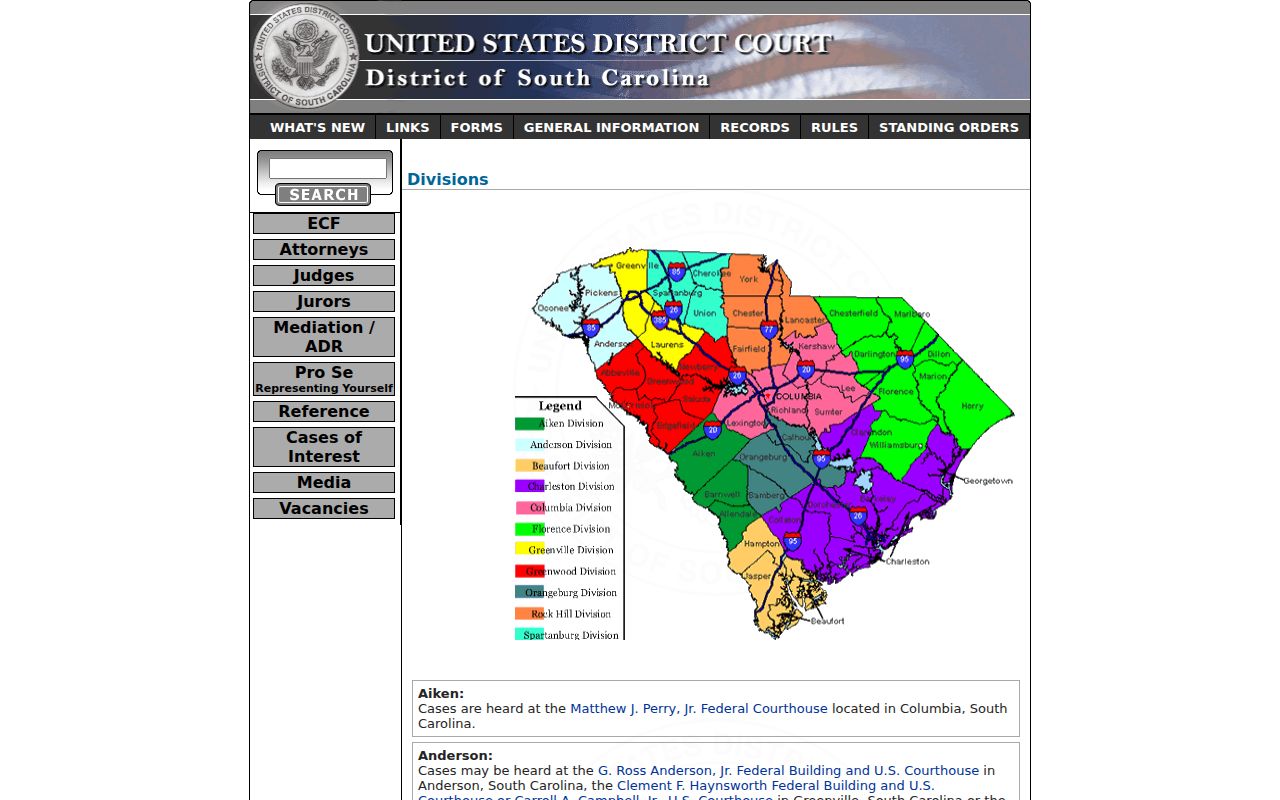
PACER's public records may leave out sealed matters. A blank Orangeburg County search result is not a federal status confirmation.
Orangeburg County Arrest Warrant Record Access
A public docket can list the case, charge category, issuing court, and bond order. What stays hidden is the working material: the affidavit, investigative detail, service plans, and identifying information may be withheld or redacted. South Carolina FOIA allows exemptions for certain law-enforcement records and pending proceedings. If a request is denied, ask for the statutory basis and for any segregable, non-exempt portions. Juvenile-identifying law-enforcement information is confidential under Title 63. The South Carolina FOIA provisions spell out both access and exemptions. Do not seek or republish another person's sensitive details in Orangeburg County records.
If There’s an Arrest Warrant for You
Think an arrest warrant is out for you? First, confirm which court issued it. Then call the Orangeburg County Sheriff Warrant line about county service status. Ask the issuing court whether counsel should arrange a voluntary appearance, whether bond is set, and whether a motion to recall or quash is on the table. Bond Court publishes its daily hearing window but no universal amount. Hold on to the case number, written instructions, any receipt, and signed court orders. A bench warrant after a missed date stays under that court's control; the bench-warrant process explains the steps. For Orangeburg County contacts, the home page's resolution steps map them out.
Important: Talk with an attorney before arranging surrender or bond, then confirm the exact court process with the issuing office.