
Orangeburg County Bench Warrants Explained
A bench warrant is court process, often connected to a missed appearance or another court requirement. South Carolina’s official forms distinguish a bench warrant after failure to appear from one after trial in absentia. The court record must show which process applies.
Do not assume every missed date creates a warrant. The issuing judge or court decides the next step. Orangeburg sources use “bench warrant” and “failure to appear” language; they do not establish “capias” as the usual local term.
Rule 30 and Orangeburg County Bench Warrants
South Carolina Criminal Rule 30 addresses the bench-warrant form, the trial judge’s signature or Clerk signature at the judge’s direction, reasonable service efforts, and reporting an unserved warrant. It describes process and service. It does not create an Orangeburg-specific recall schedule or guarantee a public search result.
The rule matters because the court and Sheriff may hold different parts of the file. Ask the issuing clerk for the docket and the Sheriff Warrant line about service status.
The official Rule 30 text is the source for the statewide procedure.
The court’s form library lists the standard summary-court paperwork. Its image below is a link to that official directory.
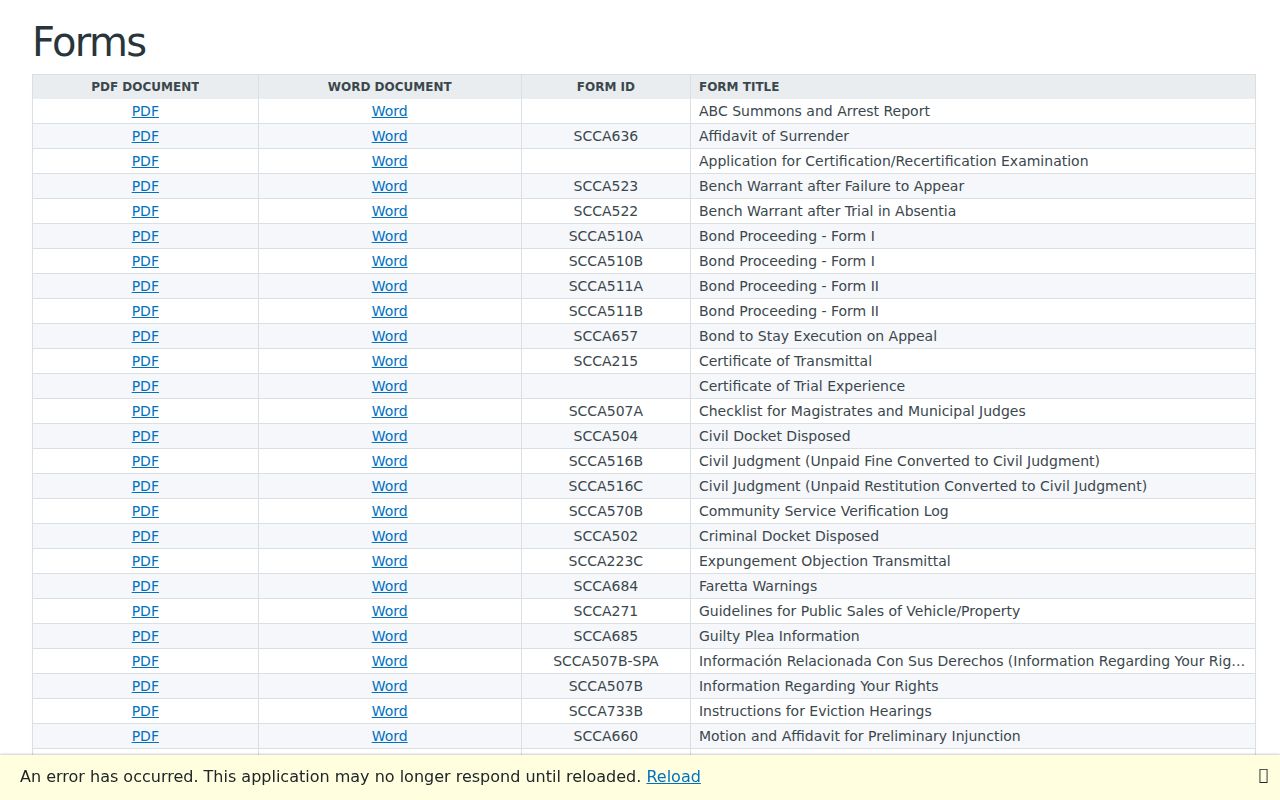
Use a form as a process reference, then ask the local clerk how it applies to the case.
How Orangeburg County Bench Warrants Are Issued
The judge orders the process under the rules for the case. A missed appearance, failure to comply, or trial in absentia may be involved, but the specific record controls. A bench warrant is not the same as a new arrest warrant based on a new complaint.
After issuance, the court record and service agency may each need an update. Rule 3 governs transmission of certain arrest-warrant and bond materials to the General Sessions Clerk; it does not mean every lower-court bench warrant appears in one county file.
SCCA523 and Orangeburg County FTA Warrants
The South Carolina forms index lists SCCA523 as a bench warrant after failure to appear and SCCA522 as a bench warrant after trial in absentia. These are official form names, not live records or proof that any individual has a warrant.
The form directory can help a reader understand the paperwork a court may use. It cannot show whether a particular order was served, recalled, or entered in a local system.
The official forms index identifies both forms. The related image links to the SCCA523 entry.
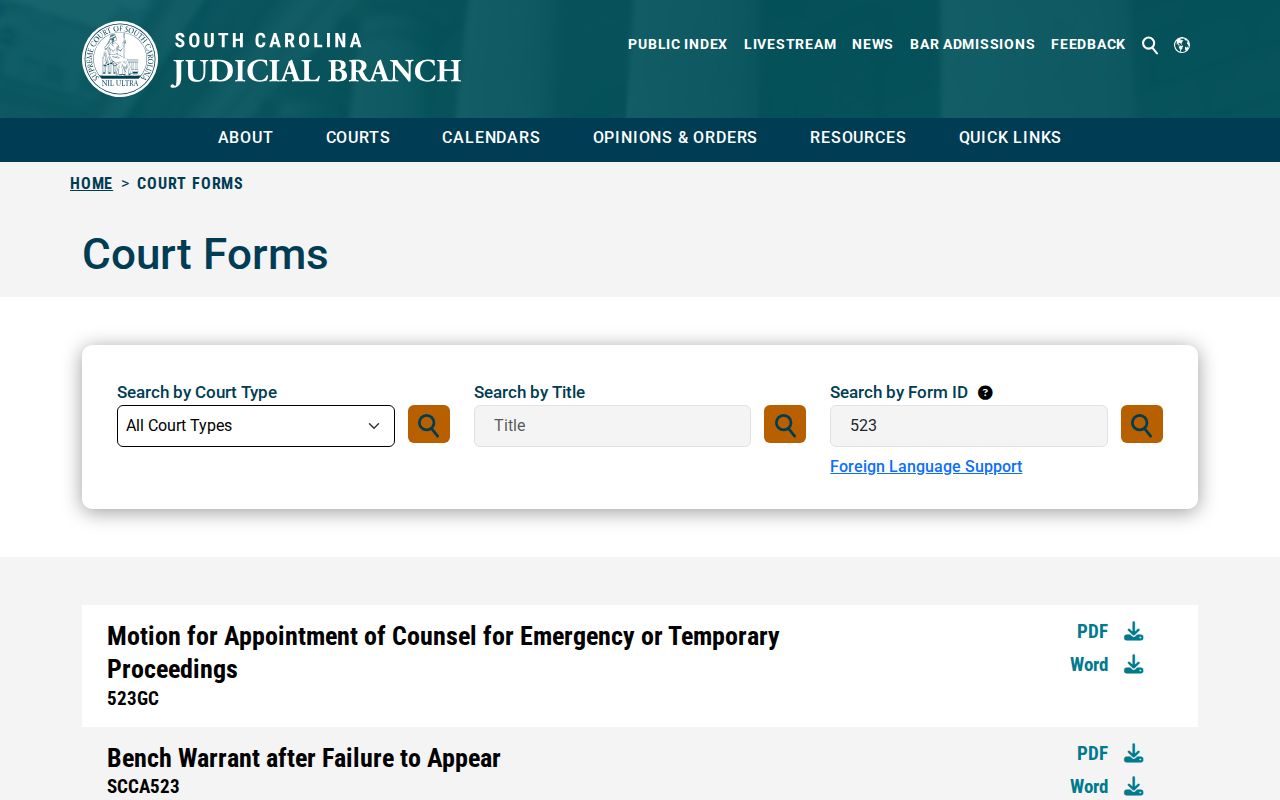
Use the form number as a court-process reference only; contact the issuing court for a case status.
Bench Warrants and Arrest Warrants Compared
A bench warrant responds to a court obligation; an arrest warrant follows the applicable probable-cause process for an alleged offense. Both can involve taking a person into custody, but they begin in different ways and point to different records. A filed case does not itself prove a current warrant.
| Feature | Bench Warrant | Arrest Warrant |
|---|---|---|
| Trigger | Missed appearance or another court requirement | Sworn complaint and probable-cause review |
| Who Issues It | The judge or court handling the existing matter | A magistrate or Municipal Court judge under the law |
| Underlying Record | Often an existing docket or court setting | A complaint and related criminal case |
| Next Step | Ask the issuing court about appearance, recall, or bond | Ask the issuing court and Sheriff about process and service |
Orangeburg County Bench Warrant Record Routes
The Clerk of Court handles Circuit, General Sessions, and Family Court filings. Sheriff Judicial Services and the Warrant function handle law-enforcement service and status questions. A court docket question and a service question may need separate contacts.
Ask the clerk for the case number, issuing court, and any filed order. Ask the Sheriff whether it can confirm service status. Do not assume a single office can answer both record and operational questions.
Resolving an Orangeburg County Bench Warrant
The issuing court controls recall, appearance, surrender, and bond procedure. There is no published countywide walk-in recall docket, universal bond schedule, or bench-warrant fee. Confirm the steps with the clerk before traveling or making a payment.
A careful sequence is to identify the court, ask whether counsel should file a motion, confirm bond and appearance terms, then keep the order or receipt and check that the relevant agency has updated its record.
- Confirm the case, issuing court, and whether the warrant remains current.
- Ask counsel whether to seek a recall or quash order, schedule an appearance, or arrange a surrender.
- Ask the court about bond, payment, rescheduling, and any required documents.
- Keep the signed order or receipt and confirm how the court reports the change.
Caution: Do not assume a ticket payment, missed-date notice, or public search result clears the warrant; ask the issuing court for written confirmation.
Missed Court Date in Orangeburg County
If you missed a court date, find the court printed on the notice or citation. A General Sessions matter belongs with the Clerk and assigned court. A traffic, Magistrate, or city case may be held by a different clerk. Ask whether the court issued a bench warrant or took another action.
A payment site may locate a citation without showing whether a warrant followed. Ask the court about a new date, motion, bond, or recall. Keep a record of the call and any official instruction.
Do not guess: The research does not establish an automatic countywide rule for every missed date; the issuing court confirms what happened and what procedure applies.
Orangeburg County Courts That Issue Bench Warrants
Start with the court on the case paper. The county lists Central, Eastern/Holly Hill, and Western/Neeses Magistrate regions, a Central Traffic Court, and municipal courts in incorporated towns. Circuit Court handles General Sessions criminal cases through the County Clerk. These locations and records are not interchangeable.
The Magistrate Court page describes regional offices and court powers. Its location image below links readers to the official court page.
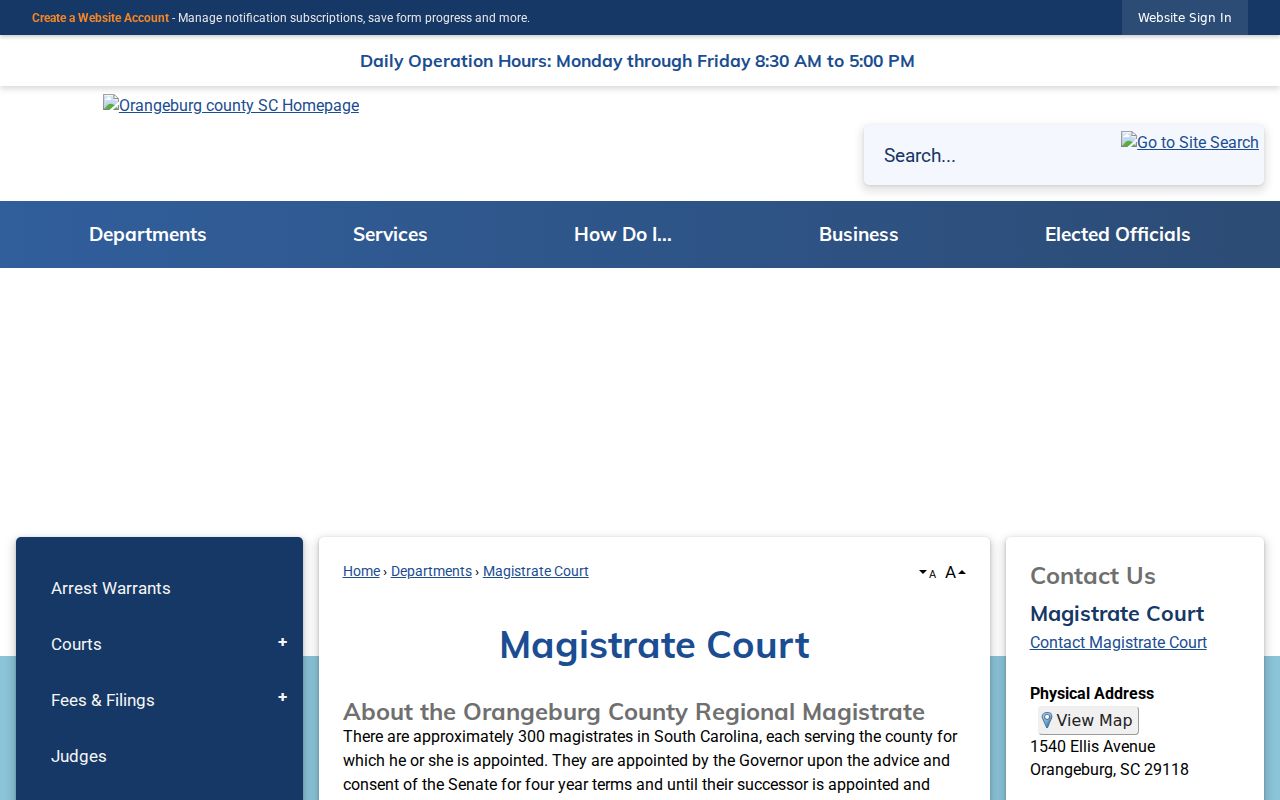
Confirm the correct region and access rules before appearing. The Law Enforcement Complex, Amelia Street courthouse, and town courts are separate places.
Finding the Court That Issued the Warrant
A bench warrant stays tied to the court that handled the underlying case. The Sheriff may serve or track process, but the issuing judge controls recall. Read the citation or case notice, then contact that court’s clerk for the docket and procedure.
For a countywide route map and the distinction among Sheriff, Clerk, and municipal records, use the Orangeburg County warrant records overview. If the court is unclear, the Clerk or Sheriff can direct the question to the proper local office.